
If you’ve ever had a student blurt out something “rude” without realizing it…
stand too close during a conversation…
or completely miss a social cue… you’ve already seen invisible rules in action.
Invisible rules are the unspoken social expectations that most people pick up naturally, but many of our students need explicitly taught.
And the truth is, these skills are not extra. They are essential.
What Are Invisible Rules?
Invisible rules are the social norms that guide how we interact with others in different situations.

They are called “invisible” because no one directly teaches them. They are expected, but rarely explained.
Things like:
- Knowing when to speak and when to listen
- Understanding personal space
- Using an appropriate tone of voice
- Recognizing how your words affect others
- Adjusting behavior based on the setting
For many students, especially those with ADHD, autism, or social communication challenges, these rules are not intuitive. Without direct instruction, they can feel confusing, inconsistent, or even unfair.
Why Invisible Rules Matter
When students struggle with invisible rules, it is often misunderstood as defiance, rudeness, or lack of effort.
But more often than not, it is a skill gap, not a behavior problem.
Teaching these rules helps students:
- Build stronger friendships
- Feel more confident in social situations
- Reduce anxiety in unfamiliar settings
- Navigate school, community, and future workplaces
- Feel more included and understood
Real-Life Invisible Rule Examples
Here are a few common invisible rules that come up every day:
1. Not Every Thought Needs to Be Said Out Loud
Students may say things that are honest but hurtful, like:
“That’s weird.” or “I don’t like your shirt.”
The invisible rule: Think it, don’t always say it.
2. Personal Space Matters
Some students stand too close, touch others frequently, or don’t recognize physical boundaries.

The invisible rule: Keep a comfortable distance unless you know it is okay.
3. Conversations Are a Back-and-Forth
A student may talk only about their interests or interrupt frequently.
The invisible rule: Take turns talking and show interest in others.
4. Different Places Have Different Expectations
Running, yelling, or being overly silly in places like stores, classrooms, or churches.
The invisible rule: Your behavior should match the setting.
5. Tone of Voice Changes Meaning
A student might sound rude, demanding, or sarcastic without intending to.

The invisible rule: How you say something matters just as much as what you say.
6. Waiting Is Part of Social Interaction
Interrupting, grabbing materials, or struggling to wait their turn.
The invisible rule: Be patient and wait, even when it’s hard.
How to Teach Invisible Rules
The key is simple but powerful: make the invisible visible.
Here are a few strategies that work:
Explicit Teaching: Do not assume students will “pick it up.” Teach the rule clearly and directly.
Use Real Examples: Show both expected and unexpected behaviors so students can compare.
Practice in Low-Stakes Settings: Role play, games, and scenarios help students build confidence before real situations.

Repetition and Consistency: These skills take time. Revisit them often in different contexts.
Reflection: Help students think about what went well and what they might try differently next time.
A Gentle Reminder
Learning invisible rules can feel overwhelming for students.
Many of them are trying their best while navigating something that others seem to “just know.”
Our job is not to correct constantly, but to guide, model, and create safe spaces to learn.
Want Ready-to-Use Invisible Rules Lessons?
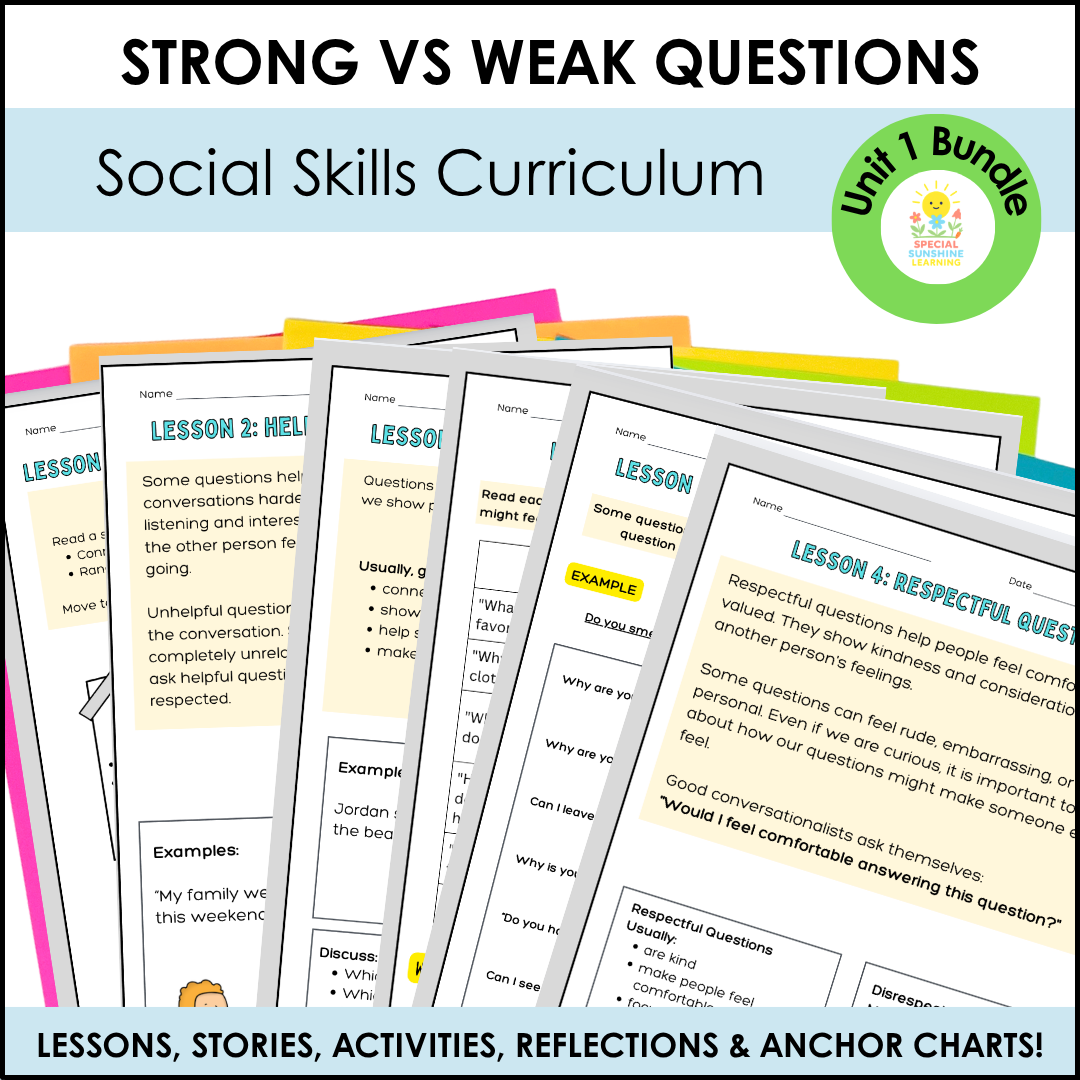
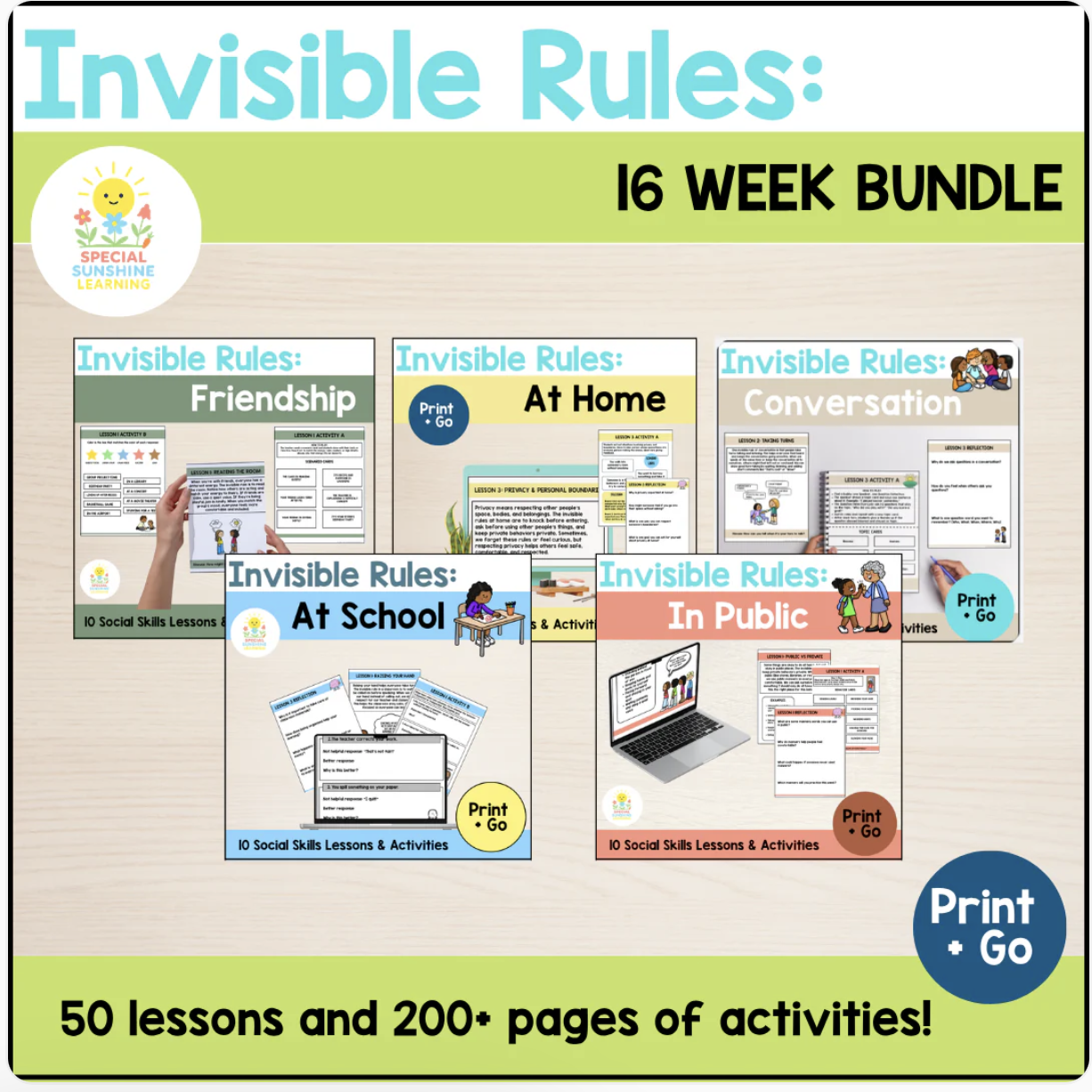
If you’re looking for structured, engaging ways to teach these skills, this is exactly why I created my Invisible Rules bundles.
Inside these resources, you’ll find:
- Clear mini-lessons that break down each invisible rule
- Real-life scenarios students can relate to
- Interactive activities for discussion and practice
- Individual worksheets for reinforcement
- Reflection pages to build self-awareness
These lessons are designed for:
- Special education classrooms
- Social skills groups
- Speech therapy sessions
- Homeschool settings
- Or any student who benefits from direct, explicit instruction
💛 You can explore the full collection here:


At the end of the day, teaching invisible rules is about more than behavior.
It is about helping students feel confident, connected, and capable in a world full of unspoken expectations.
And that kind of support makes a lasting difference.




Leave a Reply