One of the social skills I find myself teaching over and over again is how to ask good questions.
It sounds simple, but for many kids (especially those with ADHD, autism, social communication difficulties, or executive functioning challenges) it isn’t always intuitive.
I often work with students who want to make friends and participate in conversations, but they aren’t sure what to say next. They might ask random questions that don’t fit the topic, repeat the same question over and over, or struggle to think of follow-up questions that keep a conversation going.
The result? Conversations stop quickly, friendships become harder to build, and students can start feeling frustrated or left out.
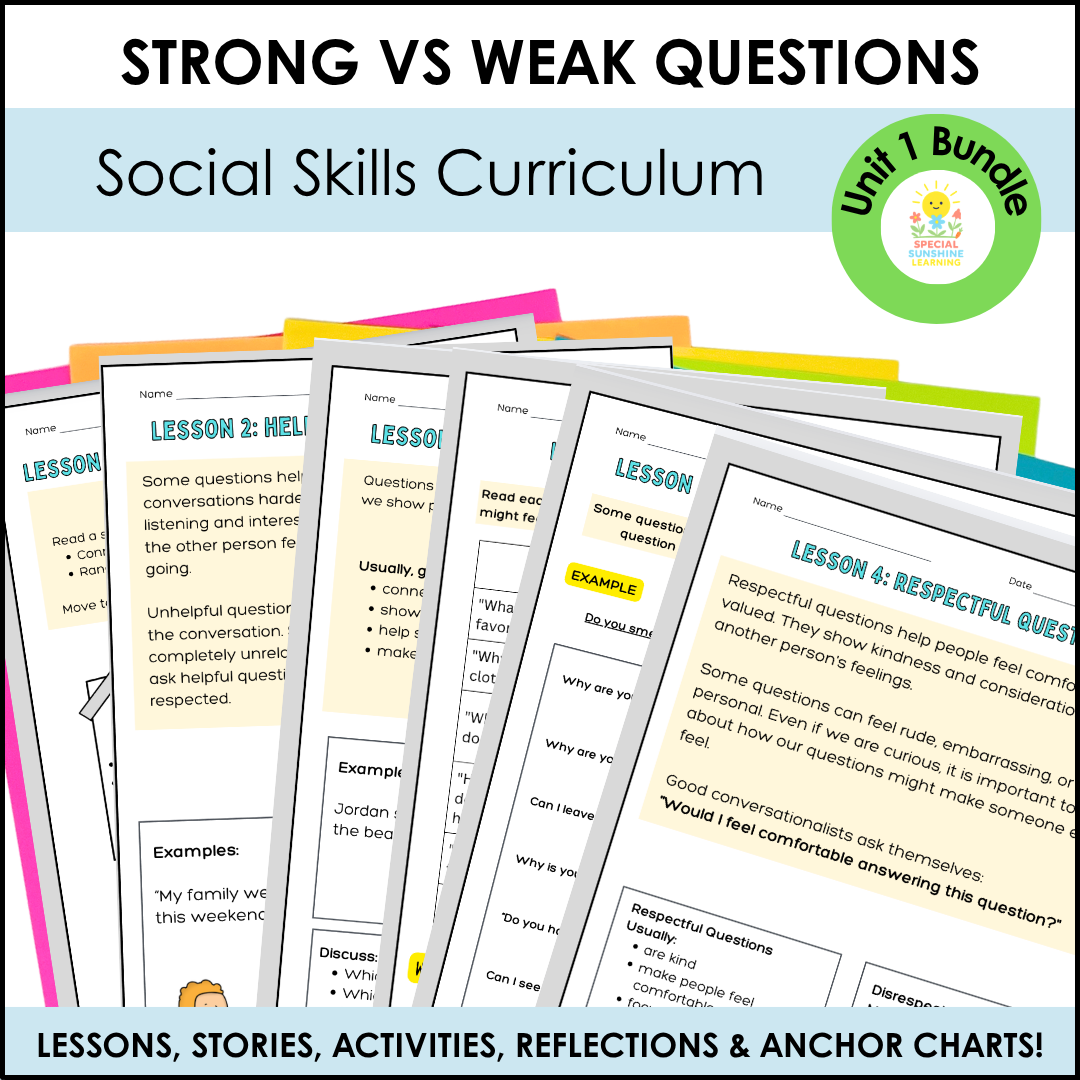
That’s exactly why I created my new Bundle: Strong vs Weak Questions | Asking Good Questions Social Skills Curriculum

Why Question-Asking Matters
Good conversations aren’t just about talking—they’re about showing interest in other people.
When students learn how to ask thoughtful, connected questions, they begin to:
- Keep conversations going longer
- Show others they are listening
- Learn more about the people around them
- Build stronger friendships
- Feel more confident in social situations
These are skills that transfer far beyond the classroom. Kids use them at recess, during group projects, at family gatherings, in extracurricular activities, and eventually in the workplace.
What’s Included?
This curriculum breaks the skill of asking questions into small, teachable lessons that students can actually understand and practice.
The first mini-bundles include:
Lesson 1: What Makes a Good Question?
Students learn the foundations of effective conversation questions, including how questions help conversations grow and show interest in others.
Lesson 2: Helpful vs. Unhelpful Questions
Students learn how some questions encourage conversation while others may stop it, confuse others, or make conversations harder.
Lesson 3: Connected vs. Random Questions
Students practice staying on topic and asking questions that connect to what someone has already said.
Lesson 4: Respectful Questions
Students learn how to ask questions that are kind, considerate, and respectful of other people’s feelings and boundaries.
Each lesson follows the same easy-to-use structure:
- Mini lesson
- Story or scenario
- Interactive activity
- Worksheet practice
- Reflection or real-life challenge
My goal was to create materials that go beyond simply telling students to “ask questions.” Instead, students learn whycertain questions help conversations grow and get plenty of opportunities to practice the skill.
Designed for Real Life
One thing I always try to keep in mind when creating resources is generalization.
Students may be able to answer questions correctly on a worksheet, but can they use the skill during lunch? During a playdate? At youth group? While talking to a sibling?
That’s why every lesson includes discussion, examples, and real-world practice opportunities to help students carry the skill beyond the classroom.

Who Is This For?
This curriculum is a great fit for:
- Special education classrooms
- Speech therapy groups
- Social skills groups
- School counselors
- Homeschool families
- Parents working on conversation skills at home
It’s especially helpful for students who struggle with social communication, perspective-taking, friendship skills, or keeping conversations going.
Final Thoughts
Teaching social skills can feel overwhelming because “having a conversation” is actually made up of dozens of smaller skills.
Asking good questions is one of those foundational skills that opens the door to stronger conversations and deeper relationships.
I’m excited to keep expanding this curriculum and creating practical, engaging lessons that help students become more confident communicators.
If you’ve ever worked with a student who struggles to know what to say next in a conversation, I hope this resource helps make teaching that skill a little easier.



Leave a Reply